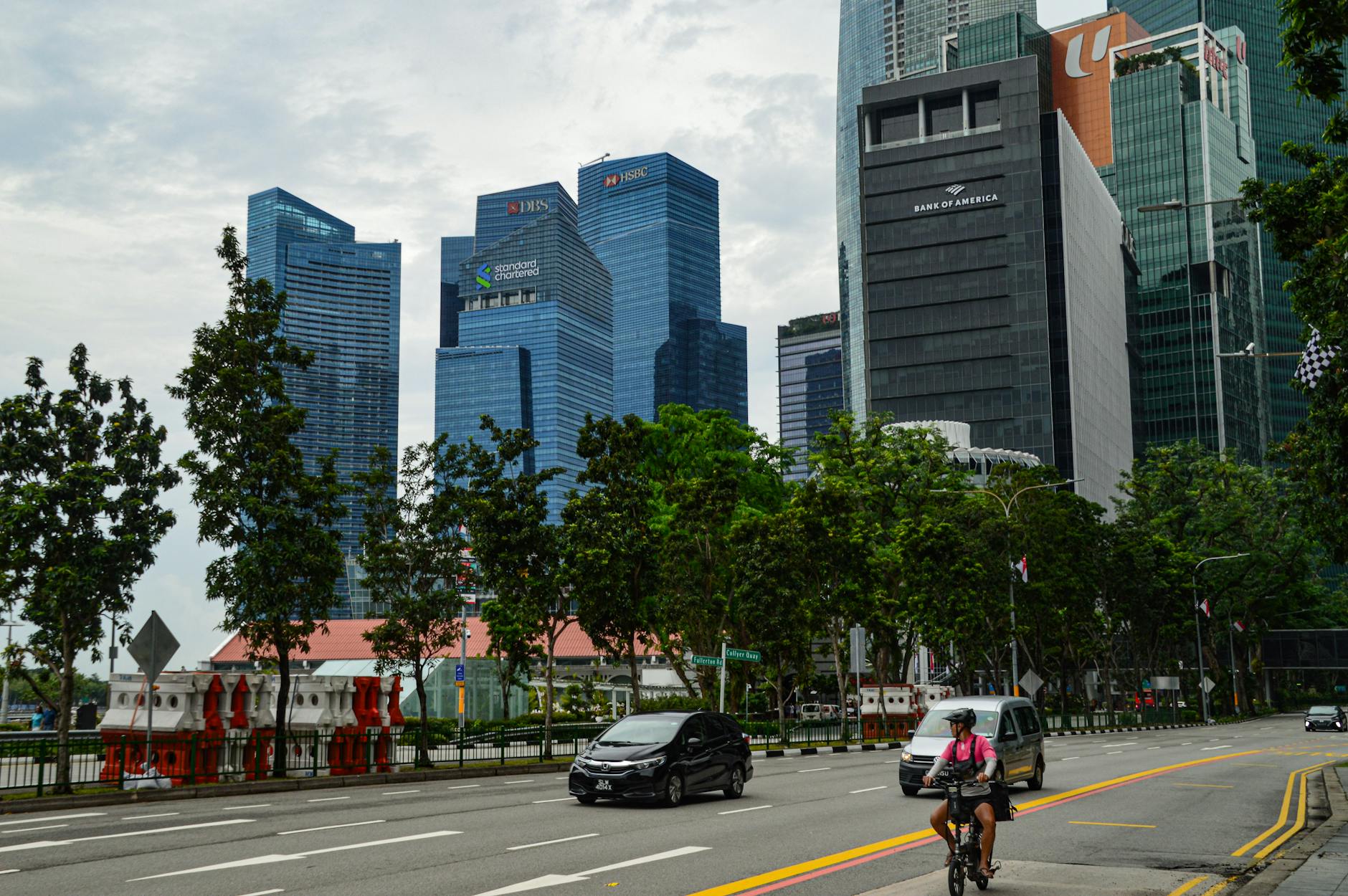

In March 2024, hackers breached a government ministry's systems and walked away with SGD $2.5 million. The attack wasn't sophisticated. It was a phishing email, a weak password, and an unmonitored system that nobody checked until the damage was done. Now ask yourself: if a ministry with a dedicated IT department, compliance officers, and a cybersecurity budget larger than your annual revenue couldn't catch it in time — what exactly is protecting your business right now? If the honest answer is "my IT guy" or "we have antivirus," you have a problem. AI cybersecurity for SMEs in Singapore is no longer a luxury item on a tech wishlist. It is the only realistic defence most small businesses have.
Why Hackers Love Singapore SMEs More Than Government Targets
Here's the uncomfortable truth: you are not too small to be targeted. You are targeted because you are small. Cybercriminals operate on economics. A government ministry takes weeks to crack, triggers investigations, and makes headlines. Your 18-person logistics firm in Paya Lebar? You have supplier bank details, client contracts, and a finance team that processes payments over email. You are faster to breach, less likely to detect it, and far less likely to report it. You are, in industry terms, low-hanging fruit.
The Singapore Cyber Security Agency's 2023 report found that ransomware incidents affecting SMEs rose 16% year-on-year. The average ransom demand received by a Singapore SME was SGD $85,000. Most paid. Most also never recovered all their data. And most had assumed, right up until the moment their systems locked, that they were not interesting enough to attack. That assumption is the single most exploited vulnerability in Singapore's SME sector — and no antivirus subscription fixes it.
Traditional cybersecurity tools are reactive. They flag things after they happen. A 15-person construction firm in Tuas found out their accounts payable email had been compromised only when a supplier called to ask why the payment went to a different bank account. By then, SGD $47,000 had moved. The email had been quietly monitored by an attacker for six weeks. Six weeks of reading every invoice, every payment instruction, every supplier conversation — and nobody noticed. That is not a technology failure. That is the absence of AI-driven monitoring that watches for anomalies in real time.
AI Cybersecurity for SMEs in Singapore: What It Actually Looks Like
When most business owners hear "AI cybersecurity," they picture a rack of servers, a team of engineers in a glass-walled NOC, and an invoice that makes their eyes water. That picture is about ten years out of date. Modern AI security monitoring tools for SMEs run in the cloud, deploy in hours, and cost less per month than a team lunch at a decent hawker centre. We are talking SGD $80 to $300 per month depending on the scale of your business. That is not a typo.
What do these tools actually do? They watch. Continuously. An AI security layer monitors login patterns, email behaviour, file access, and network traffic — and flags anything that deviates from the norm. If your finance manager logs in from Singapore every morning at 8:45am and suddenly there is a login attempt from Eastern Europe at 2am, the system blocks it and alerts you immediately. No IT department required. No one sitting in front of a screen at 2am. The AI does the watching, and your team gets a notification.
Beyond login monitoring, AI tools now scan outbound emails for signs of business email compromise — the exact attack that hit the Tuas construction firm. They identify when an email account has been quietly infiltrated by watching for subtle changes in language patterns, unusual forwarding rules, and requests that don't match established supplier behaviour. As we covered in our piece on shadow AI in the workplace, your staff are already interacting with AI tools daily. The question is whether those tools are working for your business or creating new vulnerabilities.
ABUZZ helps SMEs select, configure, and deploy these tools without needing an in-house IT department. The setup process typically takes one to two weeks. The monitoring runs in the background. Your team doesn't change how they work. They just stop being an easy target. Same team. Bigger protection.
AI Cybersecurity for Singapore SMEs: The Practical First Steps
If you want to start hardening your business today, here is where to focus. Not a theoretical framework — a practical sequence that makes a measurable difference.
Start with your email environment. Business email compromise is responsible for more financial losses in Singapore SMEs than any other attack type. An AI-powered email security layer — tools like Microsoft Defender for Business, Abnormal Security, or similar — sits on top of your existing email and flags suspicious patterns before they cost you money. If you are still running email through a basic shared hosting plan with no security layer, you are operating with an unlocked front door.
Add identity and access monitoring. Most breaches begin with a compromised credential. AI-driven identity tools monitor who is logging in, from where, at what time, and on what device. Anomalies trigger immediate alerts or automatic blocks. For a 20-person team, this costs less than you think and deploys without touching your existing systems.
Run a basic security audit before you deploy anything. This mirrors the process approach we recommend for AI implementation generally — as outlined in our guide on running a process audit before AI deployment. You need to know what you are protecting before you can protect it. What data do you hold? Who has access to it? Where does it flow? A structured audit takes a day and surfaces risks most business owners didn't know existed.
Train your team — once, properly. AI tools catch what humans miss, but humans still open phishing emails. A single two-hour training session on recognising phishing attempts, verifying payment instructions, and reporting suspicious activity reduces your human-layer risk significantly. This is not a lecture. It is a practical session with real examples. Your best people shouldn't be chasing phishing emails they don't know how to identify.
The businesses that get hit are not the ones who ignored cybersecurity entirely. They are the ones who assumed their current setup was good enough. It almost certainly isn't. And the cost of finding out the hard way — whether that is a ransom demand, a fraudulent transfer, or a client data breach that triggers PDPA penalties — is orders of magnitude higher than the cost of fixing it now. Singapore's Personal Data Protection Commission has issued fines exceeding SGD $1 million for data breaches that resulted from inadequate security controls. For an SME, that is existential.
If you want to understand how AI-driven security fits into a broader operational transformation — not just as a standalone tool but as part of a system that makes your business genuinely resilient — this piece on protecting margin in a high-cost environment covers how SMEs are using AI across operations to reduce exposure across multiple fronts simultaneously.
The government ministry had a team and still got hit. You don't have a team — but you can have AI that works like one, around the clock, for a fraction of the cost. If you want to know exactly what that looks like for your business, talk to us. We will scope it, size it, and tell you honestly what you need — no deck, no jargon, no unnecessary upsell.